
A Gift That Lives by Flowing Reflections on Lewis Hyde’s The Gift

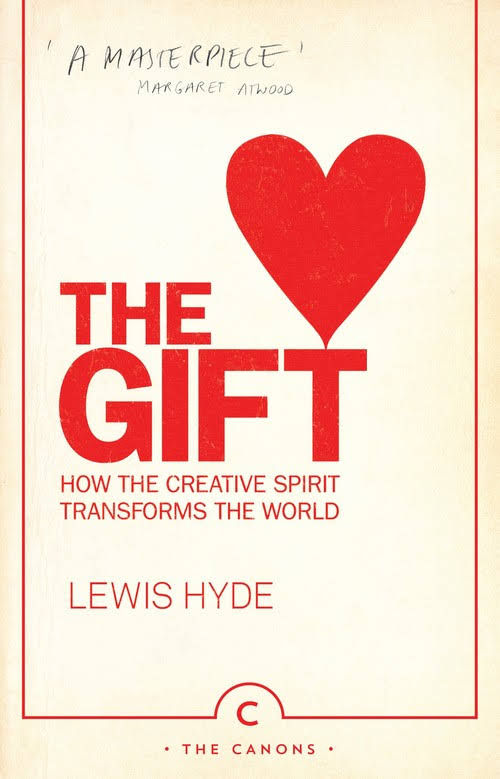
My daughter recently sent me her first book report, a review of Lewis Hyde’s The Gift: Imagination and the Erotic Life of Property (1983). Along with it came an invitation to talk together about the book’s themes. Here are some thoughts that came to me as I read her review.
Hyde proposes a “gift economy,” in which creative works and ideas are not hoarded like commodities but allowed to circulate freely. His central insight is that a gift comes alive not at the moment it is possessed but as it keeps moving. That is why gifts create bonds of community.
I believe his concept of the gift economy stands in sharp contrast to consumer society, and to a Christianity shaped by consumerism. Even within the church, an unspoken logic of “give and take” produces a consumerist Christianity that differs little from the world. This consumerist way of thinking influences our Christianity far more than we tend to realize.
According to Hyde, the more a gift circulates within a community, the more its value and influence grow. A commodity, by contrast, ends the relationship once the transaction is complete. Market exchange makes people independent of one another, while gift exchange forms emotional and communal bonds.
Some gifts also transform those who receive them. A person who receives such a gift, through what Hyde calls “the labor of gratitude,” eventually passes it on to someone else. It is much like the way those who have received grace become people through whom grace flows to others.
Hyde also examines the Deuteronomic law that forbids charging interest to a brother but permits it with a foreigner (Deut. 23:19–20), along with the medieval Christian debates over usury. Through these, he analyzes the boundary between gift and market that separates those inside the community from those outside it. What is remarkable is that Hyde is not a Christian scholar. He served as director of the creative writing program at Harvard University and later taught as the Richard L. Thomas Professor of Creative Writing at Kenyon College.
After worship yesterday, some members of our church and I talked about the everyday lives of Christians, that is, about missional living. Yet most of what we shared were not missional stories but painful ones. To Christians who long to be worshipers not only in the sanctuary but in everyday life, I warmly recommend Hyde’s The Gift. When we do not cling to the gifts we have received but let them flow on, our ordinary lives can become channels through which God’s gifts move into the world.

댓글